
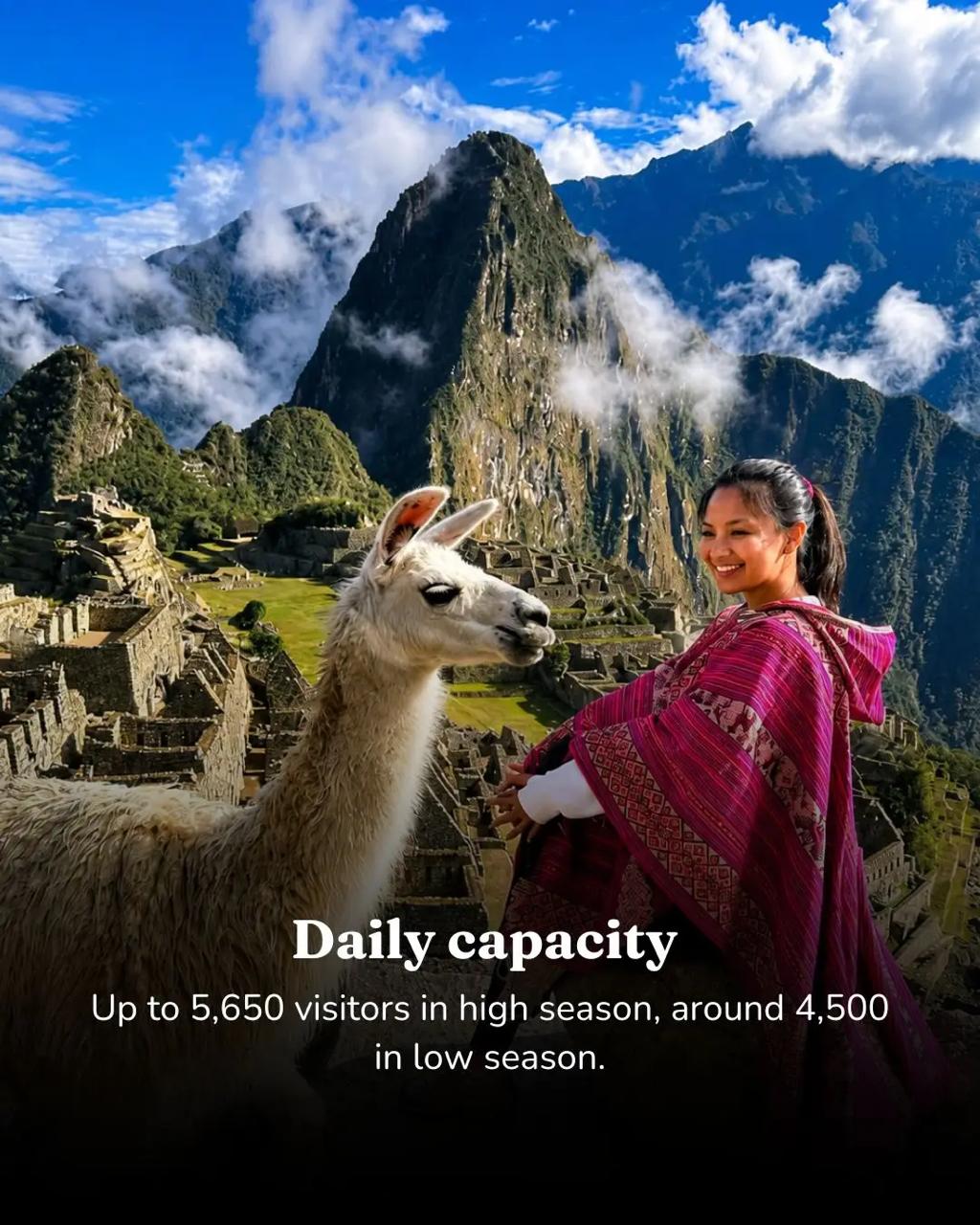
The Real Reason You Can’t Just Show Up At Machu Picchu Anymore
One number quietly controls more of your Peru trip than any other: how many people the citadel can hold in a day before it starts wearing itself away. Here’s what’s actually behind the rules — and how to plan around them.
| 4,500 / day
Regular-season cap |
5,600 / day
Peak-date cap |
500 / day
Classic Inca Trail, staff included |
6–9 months
Book-ahead window, dry season |
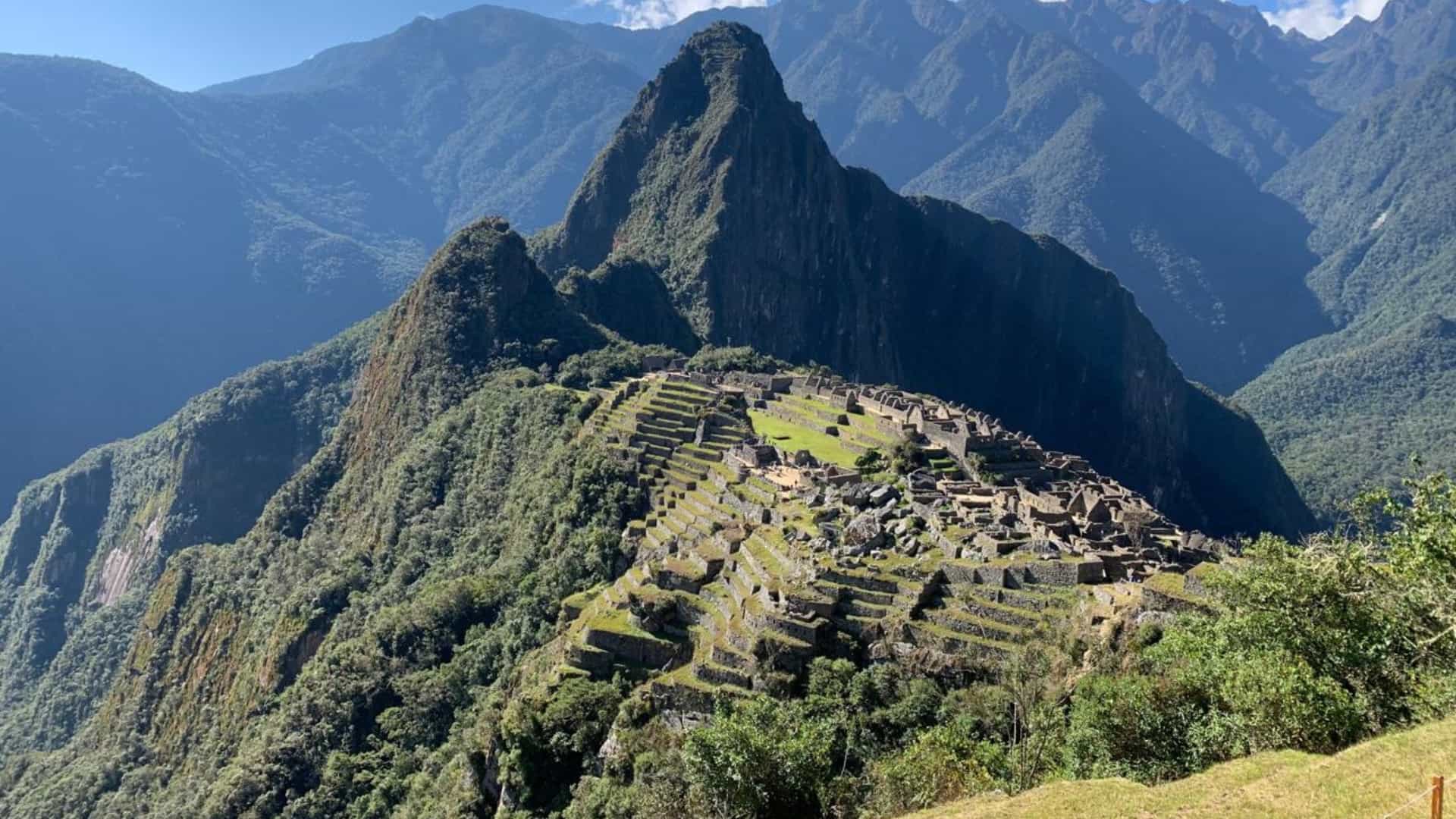
Picture this: you land in Cusco with a loose plan, figuring you’ll sort out Machu Picchu tickets once you’re there. A decade ago, that might have worked. Today, it almost never does — and the reason has nothing to do with bureaucracy for its own sake. It comes down to how many people the citadel can hold in a day before it starts wearing itself away.
That number is Machu Picchu’s carrying capacity, and it quietly shapes more of your Peru trip than almost any other single factor — your dates, your booking window, even which trek you end up hiking. Here’s what’s actually behind the rules, and how to plan around them without losing sleep over permits.
Why a 500-Year-Old Citadel Needs a Daily Headcount
Machu Picchu wasn’t built for foot traffic at today’s scale. The terraces, staircases, and temple walls are dry-stone construction, fitted without mortar, and every footstep adds incremental wear to structures that have already survived roughly five centuries of weather, earthquakes, and tourism. Multiply that wear by a few thousand visitors a day, and the math stops working in the site’s favor.
Capacity limits aren’t a purely technical formula — for the Quechua communities who still hold these mountains as sacred, they’re also an attempt to keep the site from being overrun in a way that erases that relationship entirely.
There’s a cultural layer to this that guidebooks tend to skip. Machu Picchu sits within a living landscape, not a museum diorama — and the rules that govern it try, imperfectly, to hold both truths at once.
How We Got From 2,500 to 5,600
The pattern below matters more than any single figure: policy has consistently trailed demand, not led it. Every cap so far has eventually been revised once real visitor numbers outgrew it.
| Period | Cap | What changed |
| 1980s | 270 / day | Roughly 100,000 a year. A niche destination, largely unregulated. |
| Early 2000s | Uncapped, 1M+ / year | UNESCO and the World Monuments Fund flag the site as at risk. |
| Mid-2000s | 2,500 / day | The first formal daily cap is introduced. |
| 2017 onward | 2,500 / day | Timed entry slots and split circuits spread out foot traffic. |
| 2024 | Cap exceeded | Actual visitors average ~4,100/day — well past the official limit. |
| 2025–Present | 4,500 (5,600 peak) | A tiered, seasonal system replaces the single fixed cap. |
What Actually Happens at the Gate
Your ticket isn’t a general-admission pass — it’s tied to a specific date, entry window, and one of three fixed circuits. Circuit 1 climbs to the upper terraces for the classic wide-angle view; Circuit 2 runs through the central urban sector and main temples; Circuit 3 stays low, through the agricultural terraces. You follow your assigned circuit in one direction only, and standard visits are capped at four hours — six if Huayna Picchu or Machu Picchu Mountain is bundled in.
None of this is negotiable at the gate, because there is no ticket counter at the gate. Every ticket is sold online, in advance, and during the June–August dry season, availability can vanish weeks ahead of your travel dates.
The Inca Trail’s Permit Crunch — and What To Do About It
The four-day Classic Inca Trail operates under a far tighter ceiling: 500 permits per day, covering everyone on the trail — trekkers, guides, porters, and cooks together. In practice, that leaves roughly 200 spots a day for actual trekkers, and during dry season those go six to nine months before departure.
If your window is closer than that, the Inca Trail may not be an option — and that’s fine, because Peru’s other high-altitude routes aren’t a consolation prize. The Salkantay Trek, Lares Trek, and Choquequirao Trek each offer their own dramatic terrain, generally with far more booking flexibility, and all connect toward Machu Picchu.
Rule of thumb: set on the Classic Inca Trail specifically? Lock in permits before you book flights. Flexible on route? You can plan a Peru trip on a much shorter runway.
The Wildcard: Chinchero International Airport
A new international airport near Chinchero, in the Sacred Valley, is under construction and expected to open in late 2027 — eventually handling up to eight million passengers a year and letting travelers fly directly into the region, bypassing Lima and potentially Cusco altogether.
Faster access sounds like good news, and in a narrow sense it is. But easier arrival at scale is exactly the kind of pressure that pushed visitor numbers past the original cap in the first place. UNESCO and a number of archaeologists have raised concerns about the airport’s proximity to Incan roads and undiscovered sites, along with its impact on water supply and noise near Ollantaytambo. Nothing is settled yet — but if you’re planning a trip for 2027 or beyond, it’s worth checking the project’s status as your dates approach.
Myths and Facts, Side by Side
| MYTH
You can buy a Machu Picchu ticket at the entrance if you show up early. |
FACT
Tickets are never sold on-site — every entry is booked in advance, tied to a date and time slot. |
| MYTH
The Inca Trail limit is 500 hikers a day. |
FACT
It’s 500 people total — trekkers, guides, porters, and cooks share that number, leaving closer to 200 trekking spots. |
| MYTH
If Machu Picchu sells out, your trip is over. |
FACT
Ollantaytambo, Moray, and Pisac remain open, and an experienced operator can sometimes still find availability. |
| MYTH
Higher caps mean the crowding problem is solved. |
FACT
The tiered system is a compromise, still flagged by conservationists — and reviewed annually for a reason. |
How Inca Trail For Less Plans Around All of This
We build custom Peru itineraries — typically 5 to 4 days — and permit availability is the first constraint we check, not an afterthought bolted on later. Once we know what’s actually bookable for your travel window, we design the rest of the trip around it: the Sacred Valley, Cusco, the Amazon, and whichever trek route genuinely fits your dates and fitness level.
That also means we keep a real Plan B on hand. If the Classic Inca Trail is sold out for your window, we already know which alternative route makes sense for the season and the terrain you want.
Quick Answers
How many people can visit Machu Picchu per day?
Up to 4,500 in the regular season, up to 5,600 on designated peak dates, with no more than 2,400 inside the citadel at any one time.
Does the Inca Trail’s 500-person cap include guides and porters?
Yes — trekkers, guides, porters, and cooks all count toward the same 500-person daily limit.
How far ahead should I book the Inca Trail?
Six to nine months for dry-season dates (April–September). Shoulder and rainy-season dates sometimes open up closer to departure.
What if I can’t get Machu Picchu tickets for my dates?
You won’t get a same-day ticket — daily quotas aren’t exceeded once full. Alternative sites nearby remain open, and a trusted operator may still locate availability through official channels.
Should I wait for the Chinchero airport before booking?
No — it isn’t expected to open until late 2027, and current entry rules and permit limits apply regardless of how you arrive in the region.
Can you build my itinerary around real permit availability?
That’s the starting point for every trip we plan — we confirm what’s bookable for your dates first, then design your 15–20 day route around it.
Plan around the real numbers, not guesswork.
We check permit and ticket availability for your travel window first, then design a custom 15–20 day Peru itinerary around it.
incatrailforless.com