
The 2-Day Inca Trail: The Easiest (and Most Beautiful) Way to Walk Into Machu Picchu
Have you ever asked yourself, Is the 2-Day Inca Trail easy? If you want an easy Inca Trail to Machu Picchu, this hike could be the perfect choice. It is shorter than the Classic Inca Trail and is a great option for beginners and travelers with limited time.
The 2-Day Short Inca Trail is one of the best easy Inca Trail hikes in Peru. You will walk on the original Inca Trail, visit the amazing ruins of Wiñay Wayna, and enter Machu Picchu through the famous Sun Gate. Many travelers choose this easy Inca Trail because it offers the same unforgettable experience with less hiking.
So, is the 2-Day Inca Trail easy? For most people, the answer is yes. If you have average fitness and enjoy walking, you can complete this trek. The trail is much shorter than the Classic 4-Day Inca Trail, making it one of the easiest Inca Trail options for first-time hikers.
In this guide, you will learn everything about the 2-Day Inca Trail. We explain the 2-Day Inca Trail difficulty, hiking distance, altitude, hiking time, what to pack, the best travel tips, and the 2-Day Inca Trail cost. We also compare this easy Inca Trail with the Classic Inca Trail, so you can choose the best trek for your trip to Machu Picchu.
By the end of this guide, you will know if the 2-Day Inca Trail is the right adventure for you and why many travelers call it the best easy Inca Trail to Machu Picchu.
What exactly is the 2-Day Inca Trail?
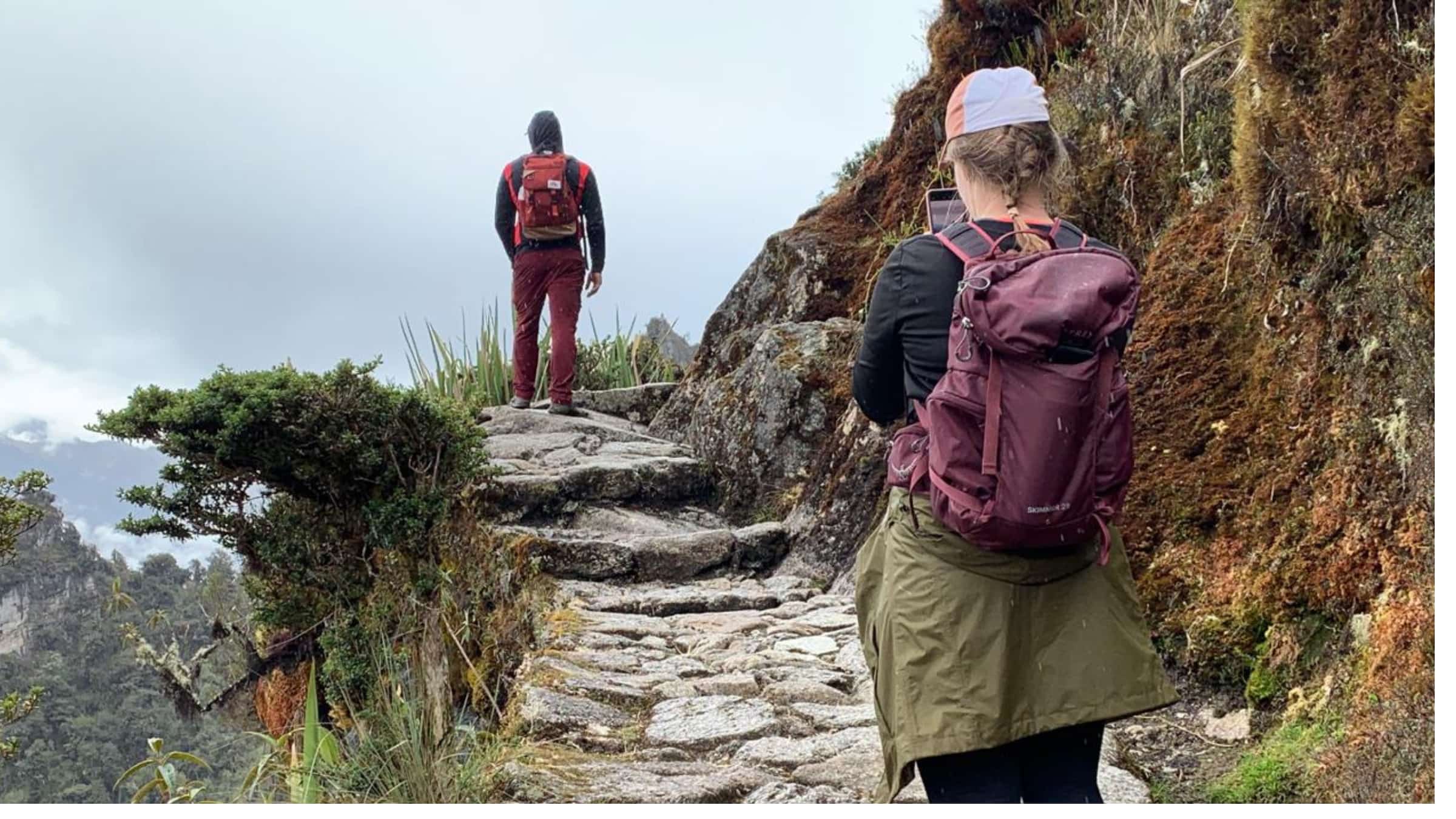
Unlike the Classic Inca Trail, which covers 42 to 50 kilometers over four days of camping, the short version picks up the final stretch of that same ancestral route. The starting point is kilometer 104 of the railway that connects Ollantaytambo with Aguas Calientes. From there, accompanied by a professional guide, you’ll walk along original stone paths, crossing cloud forest, Inca terraces, and postcard-worthy landscapes, all the way to the famous Sun Gate (Inti Punku) — the very same point through which Inca pilgrims once entered the sacred citadel.
Without exaggeration, it’s one of the most rewarding ways to experience Machu Picchu: you walk part of the historic trail, visit archaeological sites that see far fewer crowds, and arrive at the citadel with the satisfaction of having «earned» it with your own two feet all in a single weekend.
Day-by-day itinerary
Day 1: Ollantaytambo → Km 104 → Sun Gate → Aguas Calientes
Your adventure starts early. Around 4:00 am, you’ll be picked up from your hotel in Cusco and transferred to the Ollantaytambo train station. From there, a comfortable tourist train will take you to kilometer 104, the exact point where the hike begins.
Once on the trail, you’ll cover approximately 11 to 12 kilometers (around 7 miles) over a journey of roughly 6 to 7 hours, with breaks along the way to rest, take photos, and listen to your guide’s stories. During the hike, you’ll visit two unmissable archaeological sites:
- Chachabamba, a former strategic checkpoint that once controlled access to the Inca Trail.
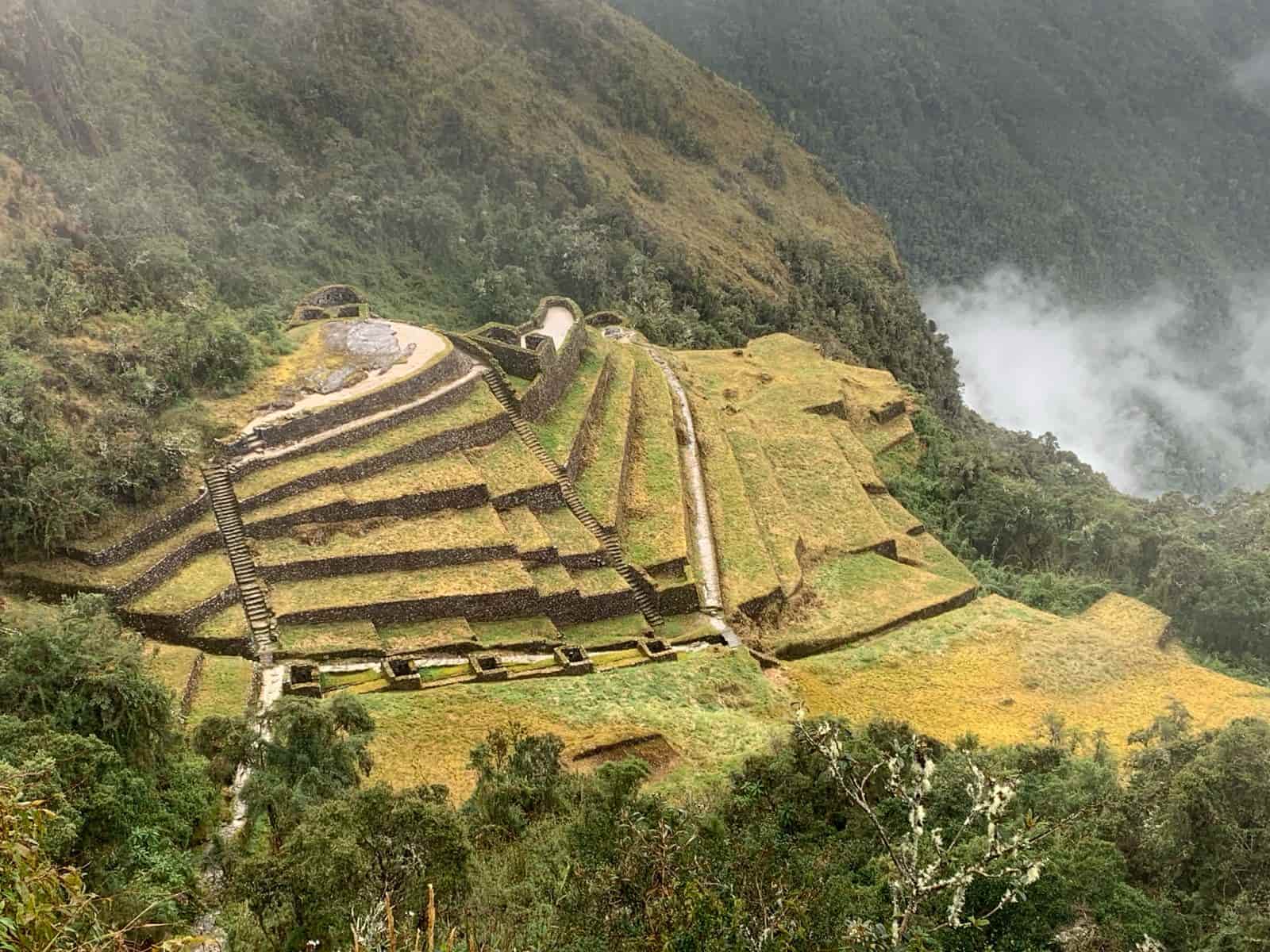
- Wiñay Wayna, one of the most impressive archaeological complexes on the entire route, with agricultural terraces that still leave travelers breathless today.
As for altitude, you’ll start at around 2,100 meters (6,890 ft) above sea level and gradually climb to the highest point of the route, the Sun Gate, at approximately 2,700 meters (8,860 ft). It’s a significant elevation gain, but a manageable one, spread out over several hours of walking.
When you reach Inti Punku, you’ll get your first panoramic view of Machu Picchu — especially spectacular in the late afternoon light. After soaking in the moment (and taking plenty of photos, of course), you’ll descend into Aguas Calientes, where a well-earned dinner and a comfortable hotel bed await. No tents, no sleeping bags: after a full day of hiking, a real bed feels amazing.
Day 2: The visit to Machu Picchu
Day two also starts early, though with much less physical effort. You’ll catch one of the first buses up to the citadel to get in right when it opens, avoiding the midday crowds. Once inside, you’ll enjoy a guided tour of about two hours through Machu Picchu’s most important areas, where your guide will share the history, architecture, and best-kept secrets of this Inca citadel.
If you booked in advance, this is also the ideal time to climb Huayna Picchu or Machu Picchu Mountain, two optional hikes that reward you with even more spectacular views of the area. After exploring at your own pace, you’ll take the bus down to Aguas Calientes to catch your train back to Ollantaytambo or Poroy, followed by ground transportation back to Cusco.
Is it really easy?
Here’s the question everyone asks before booking. The honest answer is: easy to moderate, depending on your fitness level and how well-acclimatized you are to the altitude. You don’t need to be an athlete or have prior trekking experience, but you should feel comfortable walking for several hours over uneven stone steps and a few steeper sections.
The best part is that the group and the guide set the pace, so there’s no rush and no competition. Compared to the Classic 4-Day Inca Trail — which involves carrying gear, camping overnight, and covering much longer distances at higher, more demanding altitudes — this short version is considerably more accessible for the vast majority of travelers with an average fitness level. If you walk regularly, handle stairs without issue, and give your body a couple of days to acclimatize, you should be able to enjoy the hike without major difficulties.
Essential tips to make the most of your hike
We want this experience to be unforgettable for all the right reasons, so here are our best tips:
- Acclimatize before you start. Spend at least two days in Cusco or, even better, in the Sacred Valley (which sits at a lower altitude and makes adjusting easier) before beginning the hike. Your body will thank you.
- Stay hydrated in the days leading up to the hike and throughout it, and avoid alcohol the night before.
- Choose the right footwear. Wear broken-in trekking shoes with good grip — never brand-new ones on hike day.
- Dress in layers. The climate shifts quite a bit between the cloud forest and the higher, more open sections, so being able to add or remove layers makes a real difference.
- Don’t forget sunscreen, a hat, and insect repellent. The Andean sun is more intense than it looks, even on cloudy days.
- Bring trekking poles if you have sensitive knees; they help enormously on the stone-step descents.
- Book Huayna Picchu well in advance if you’re interested in climbing it. Daily visitor spots are limited and tend to sell out months ahead of time.
- Remember that the trail can only be hiked with an authorized tour agency. Peruvian authorities don’t allow independent hiking, so make sure to book with a reputable operator.
- Carry some cash in soles for tips or small purchases in Aguas Calientes, since card coverage isn’t guaranteed everywhere.
The big advantages of the 2-day Inca Trail
If you’re still weighing this option against other ways to reach Machu Picchu, here’s why so many travelers choose it:
- You get the authentic Inca Trail experience without needing a full four days. You walk the final stretch of the original trail and cross the Sun Gate, just as Inca pilgrims once did.
- It requires far less time, making it ideal if your travel itinerary is tight or you simply prefer not to dedicate so many days to a single activity.
- No camping gear or extensive trekking experience required. You sleep in a comfortable hotel, not a tent — a huge relief for many travelers.
- You get to visit Machu Picchu twice: once at sunset on the first day, from the Sun Gate with spectacular light, and again the next day at a relaxed pace on a full guided tour.
- Permits can be booked with less lead time than the Classic Inca Trail. While the 4-day version usually requires booking 4 to 5 months in advance, the short version generally only needs about 3 months (though booking earlier is always better!).
- It’s more welcoming for groups with different fitness levels, like families or couples where not everyone is an avid hiker.
How much does the 2-day Inca Trail cost?
Pricing varies depending on the agency, the season, and whether the included accommodation is hotel-based or camping-based, but you can generally expect a range of US$475 to US$750 per person. This price usually includes:
- Ground transportation between Cusco, Ollantaytambo, and Km 104.
- Round-trip tourist train ticket.
- Short Inca Trail permit and Machu Picchu entrance fee.
- Professional guide, bilingual in most cases.
- Hotel accommodation in Aguas Calientes.
- Meals during the day of the hike.
- Bus tickets up and down to the citadel.
If you’d like to add the Huayna Picchu climb, expect an additional cost of approximately US$60 per person. And if you’d prefer a higher-category hotel in Aguas Calientes or a single room, some agencies offer upgrades for an extra fee.
It’s worth noting that, although the price may seem similar to the Classic 4-Day Inca Trail, this is because operating costs — train tickets, buses, and lodging — remain high regardless of the trek’s length. Even so, it remains an investment that’s well worth every dollar for the experience it delivers.
Our final recommendation
The 2-day Inca Trail is, without a doubt, one of the best ways to experience Machu Picchu if you’re looking for a balance of adventure, authenticity, and comfort, all within a short timeframe. You don’t need to be a trekking expert, you won’t have to carry camping gear, and you’ll still get to experience that same magical moment of crossing the Sun Gate and seeing the Inca citadel unfold before your eyes for the first time.
Whether you’re traveling as a couple, with friends, or with family, this is an experience that blends history, nature, and just enough physical effort to make the reward feel even more special. Book in advance, prepare using our tips, and get ready for one of the most memorable moments of your trip through Peru.